Walk into any kind of treatment center on a Tuesday afternoon and you can feel it: the hum of initiative, the tiny victories, the practiced tranquility of parents juggling routines, sensations, and types. I bear in mind resting next to a mother named Tasha as her boy exercised using a communication gadget. He touched a button for "a lot more," after that sought out with a smile that filled up the room. That a person word took months of work, a funding battle for the tool, training sessions, and a medical professional that declined to let points stall. None of that happened by accident. It took place since a network of individuals, programs, and a figured out family members gathered, step by step.
Disability solutions and assistance organizations usually operate in the background, however their finger prints are everywhere when a child gets the ramp they require, a young adult lands a first job, or an aging parent receives respite care at simply the appropriate minute. Think of them as a knotted rope: advocacy, scientific know-how, sensible logistics, and emotional support woven right into something strong sufficient to lug a whole family via uncertain terrain.
What "assistance" looks like when you live it
Support is not a solitary program or an one-time checklist. It is a choreography. Families user interface with public agencies, private clinicians, institutions, companies, and community centers, all of which have various timelines, lingo, and standards. A seasoned situation manager from a Disability Services and Support Organization discovers a household's rhythm and aids them maintain beat.
I collaborated with a teen, Mateo, that required a work-related therapy examination after a development eruption changed just how he relocated via his day. By the time I satisfied him, visits had been terminated twice, and the family's transportation voucher ran out. What transformed the trend was uncomplicated, but challenging: the nonprofit coordinator called the transportation company herself, located an evening appointment two bus lines better to the family members's home, and texted tips in Spanish. The therapy didn't get a lot more innovative. The access did.
Underneath stories like Mateo's are dozens of unglamorous tasks: intake forms, insurance policy pre-authorizations, letters of medical necessity, and school meetings. When those jobs line up, momentum builds. When they don't, family members stall and energy drains pipes away.
The quiet design of care
Most community-based assistance complies with a repeatable framework, even if it hardly ever looks clean from the outside.
First get in touch with is usually a phone call or an internet site type. The very best organizations react within two business days, make clear qualification, and publication consumption within a week. Timeliness issues. A three-week wait can suggest a missed out on home window for an evaluation or a parent losing work hours to uncertainty.
Intake collects the bones of a plan: diagnosis or suspected condition, living scenario, existing services, and instant worries. A great intake prevents interrogating households, and it translates. If a moms and dad explains, "He screws when he listens to loud sounds," a solid case manager hears: sensory level of sensitivities, safety and security threat, need for environmental adjustments, and perhaps an occupational therapy referral.
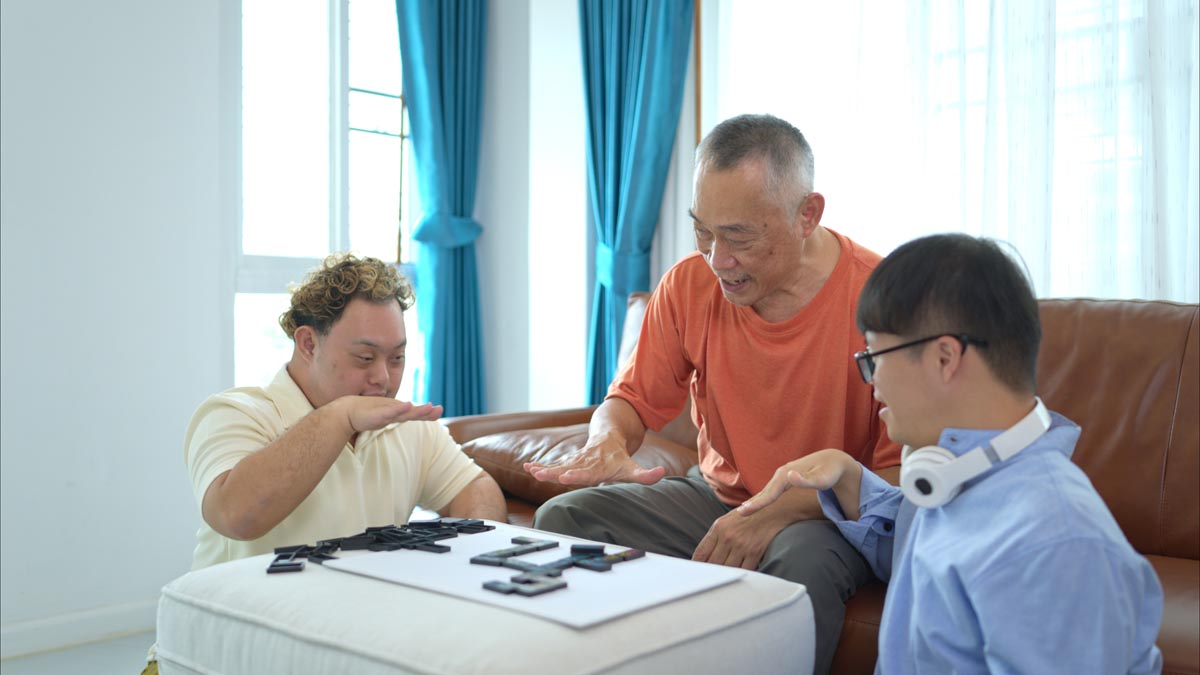
Assessment transforms that very first illustration into a workable map. It covers day-to-day living activities, communication and wheelchair, safety and security, social engagement, and caregiver capacity. Theoretically, these are domains. In reality, they show up as whether a teen can cross the street safely, whether morning routines finish in rips, and whether a parent can make it with a workday without a panic knot in their stomach.
Coordination links the items: medical carriers, school groups, work assistance, and advantages. This is where several families lose steam without aid, since every system has its own policies. Experienced organizers recognize the order of operations. For example, they protect sturdy medical tools approvals before scheduling PT, so the therapist can train with the specific gadget the customer will use at home.
Review and adapt maintain solutions pertinent. Needs change with a kid's development, a task loss, or a brand-new medical diagnosis. I have actually seen quarterly check-ins protect against situation by catching small shifts early: a caretaker's neck and back pain, a young person's increasing isolation after leaving high school, a medicine change that affects appetite and energy.
The framework is not exhilarating, but it is trustworthy. When organizations value these actions and maintain the family members at the facility, the day-to-day ends up being workable and hope becomes practical.
Money and documentation, the twin gatekeepers
Funding drives gain access to. Even one of the most enthusiastic experts can not supply a service you can not spend for. Depending on where you live, families may depend on Medicaid waivers, state disability funds, school-based services under concept, company insurance coverage, exclusive gives, or a patchwork of every one of the above. Browsing this maze is a capability in itself.
Two truths attract attention. First, qualification is an ecosystem. A child might qualify for one program because of cognitive standards but be denied another as a result of earnings thresholds or immigrant status. Rejections are not completion. Appeals succeed regularly than households expect, especially when accompanied by concrete paperwork. Second, timing matters nearly as much as eligibility. A Medicaid waiver waitlist could extend months or years. Smart companies build bridges, securing acting assistances like neighborhood grants, sliding-scale therapy, or loaner equipment.
Families frequently ask where to start. A practical very first step is to detail existing diagnoses, records, and college records in one folder, paper or electronic. After that, identify your main financing courses. If Medicaid is on the table, start the application early, even if you are uncertain. If employer insurance is main, request an instance supervisor via the insurer. Lots of plans designate a registered nurse or social worker that can accelerate authorizations. Maintain names, days, and the idea of every phone call. It feels tiresome in the minute, however that log usually opens doors later.
The variety of services that transform daily life
Walk through a week with any type of family utilizing special needs services and you will certainly see a living directory of supports. The mix changes, but a couple of groups show up repeatedly.
Clinical therapies rest high on the list. Occupational, physical, and speech-language therapy are one of the most usual, with developmental treatment for more youthful kids and behavioral services where ideal. Families sometimes stress that treatment transforms life right into a routine of drills. The very best medical professionals demand integrating goals right into real routines: practicing zippering on the jacket the kid actually uses, practicing work environment discussions at the diner where a young adult intends to apply, refining transfer methods in the home's slim hallway, not in a roomy clinic room.
Assistive innovation ranges from low-tech to complex. It is the distinction between a kid joining a class conversation by means of an easy photo board and a teen utilizing a speech-generating device to offer a discussion. It is a tailored seats system that stops pressure injuries, or a smart-home arrangement that allows someone transform lights on individually. Frequently, tools rests unused because training is revealing. Organizations that spending plan time for caretaker and customer training see greater tool adoption and less frustration.
Respite treatment conserves families. I have actually met parents who confess they waited to make use of respite because it felt like surrendering. It is the opposite. Planned breaks maintain houses stable. A few hours a week can recover persistence and allow brother or sisters enjoy their own tasks. Situation reprieve can maintain a family undamaged throughout clinical or behavior flare-ups.
Education sustains bridge schools and households. Supporters help moms and dads get ready for IEP conferences, analyze examination outcomes, and promote suitable holiday accommodations. Several households do not recognize they can request midyear IEP assesses if goals are off-track. Teams can adjust services much faster than you assume when prompted by information and concrete observations.
Employment solutions alter the arc of the adult years. Work trains, internships, and company collaborations require time to develop, but the benefit is dignity and independence. I dealt with an organization that tracked job retention at 6, 12, and 24 months. The pattern was clear: candidates who had a steady onboarding, with fading supports over the first 90 days, were twice as most likely to hit the one-year mark contrasted to those that started at full speed with minimal mentoring. Rate matters.
Housing and transport create or close doors. A mobility device ramp and a trustworthy experience are the difference in between staying home and being part of a community. Some nonprofits fund little home alterations up to a few thousand bucks. Others coordinate with city paratransit, ride-share coupons, or volunteer driver networks. Family members take too lightly how many remedies exist up until somebody lays them out plainly.
Mental health and wellness supports for caretakers and people round out the picture. Fatigue is not an ethical failing, it is biology. Therapy, colleagues, and functional stress management minimize situations. One mom told me that a six-session counseling series did much more for her kid's actions than any new therapy, due to the fact that she reacted in different ways. That is not magic, it is systems thinking at a human scale.
The power of peer networks
Professionals bring experience, however peers supply belonging. In one parent team I assisted in, every person brought a tiny win to every conference. Sometimes it was big, like an effective independent commute. Often it was moderate: a brand-new going to bed routine that minimized arguments, paperwork submitted ahead of due date, a weekend getaway that functioned. The team's safe of small wins became a common playbook.
Peer coaches also convey practical assumptions. They will certainly tell you which institution principal actually returns phone calls, how long the regional wheelchair vendor is requiring to supply repair services, and what to load for a neurodiversity-friendly trip to the zoo. That type of granular expertise is the distinction between theory and lived success.
Not every group fits every family. Some prefer a WhatsApp thread to a weekly meeting. Others want in-person link, not one more screen. Good organizations supply multiple layouts, consisting of language-specific and culturally informed groups. Incorporation is not a leaflet in multiple languages, it is assistance that respects differences in exactly how family members interact and make decisions.
When systems encounter real life
There is a void between policy and the kitchen table. Consider appointment hours. Clinics frequently run nine to four. Moms and dads function. Pupils have institution. Households end up selecting in between therapy and incomes, or therapy and truancy letters. Organizations with extensive hours or Saturday ports remove an unneeded trade-off.
Another friction point is eligibility cliffs. A little income increase can tip a family off an aid, leaving them even worse off. Some programs smooth these high cliffs with gradual phase-outs or momentary extensions after job adjustments. Ask about these choices. They are not constantly advertised.
Rural and tribal areas encounter unique barriers, from long travel distances to restricted company availability. Telehealth has actually assisted, but not uniformly. A video clip call for speech treatment can work well. A mobility device suitable or sensory assessment, less so. Hybrid designs, where a neighborhood area worker partners with a remote specialist, often tend to produce much better results than telehealth alone.
Crisis action is a recurring failure point. Families calling for assistance during actions escalations sometimes satisfy police instead of trained situation groups. Several areas currently money mobile dilemma systems with de-escalation training and mental wellness knowledge. If you have access to such a team, program the number into your phone and share it with caretakers and colleges. Prep work defeats panic.
Measuring what matters
Data can really feel chilly when your emphasis is on a solitary child's needs, however measurement assists direct limited sources. The numbers that matter are not always the elegant ones. Track wait times to initial visit, follow-through rates for referrals, tools delivery times, and caretaker stress and anxiety degrees making use of straightforward ranges. I have actually seen programs double down on pricey interventions when truth bottleneck was the two-month lag to get a consumption scheduled.
A practical criteria assists. As an example, reducing time from recommendation to first call to 48 hours is attainable for several companies with small process changes. Decreasing no-show prices by validating appointments through message, not just email, returns fast renovations. Tiny operational wins equate into family stability.
Families can make use of the exact same logic. Produce a straightforward dashboard for your home, absolutely nothing fancy. What are the top three objectives over the following 90 days? Possibly it corresponds use a communication application, a successful bus adventure technique, and jumping on a Medicaid waiver list. Revisit monthly. When you track what you worth, you notice when the ground changes, and you can readjust prior to a trouble comes to be a crisis.
How to choose a reliable partner
Finding the ideal Disability Services and Support Organization is part study, part conversation, and part intestine check. The site can look polished while daily operations delay. Request for specifics.
- How rapidly do you arrange intakes, and what is the ordinary delay time for your services? What languages do you support for direct services and written materials? How do you train families to use assistive technology, and what follow-up do you provide? What is your plan for missed visits and rescheduling? How do you determine results, and will certainly you share those metrics with us?
Listen to just how staff response, not just what they say. Do they provide instances? Do they respect your time when scheduling calls? Do they streamline info or send you on a scavenger search? Count on the signals.
The caregiver's toolkit, developed from experience
Caregivers are the continuous in a moving landscape. In time, you learn what to bring, literally and figuratively. Keep a go-bag with snacks, a favored convenience product, any type of needed medicines, and a copy of clinical and institution recaps. Store digital documents in a cloud folder with clear names: "IEP 2025-01-12," "OTeval final," "Medicaidapproval _ letter." When a person asks for proof, you prepare in one minute, not one week.
When a new solution begins, request the plan in your own words: what will take place, exactly how usually, that leads, how progress will be tracked, and that to speak to if something slides. If the plan really feels obscure, claim so. Vague plans wander. Clear plans move.
Pay focus to your own power. If you really feel dread prior to every appointment, something needs to alter. Perhaps it is the moment of day, the clinician's method, or the sheer quantity of services. Downsizing briefly to shield the connection with your child can be better than pushing through an additional month of rips. I've encouraged family members to pause one treatment for a season, refocus on one priority, after that restore. Progress resumed because the family returned to with capacity.
Collaboration, not hierarchy
The healthiest groups deal with households as equal companions. You will certainly understand you have a good collaboration when experts inquire about your know-how and follow your lead on the things you understand finest: your child's triggers, your early morning routine, your social norms. They will advocate with you, not for you in such a way that sidelines your voice.
That spirit encompasses colleges and employers. When a young person I dealt with landed a job at a food store, the job train came close to the supervisor not with an ask for charity but with an efficiency strategy: clear jobs, aesthetic lists, and a responses routine. Within a month, the supervisor was extoling the brand-new hire's precision at stock. Pride is contagious when expectations and supports align.
The long arc, seen up close
Families often ask how long it requires to see modification. The truthful response is that modification has a different rhythm in each domain name. A mobility device repair service may change life in a day. A communication system could take 3 to six months to really feel natural. A work journey may unravel over a year: discovery, skills building, test positionings, after that a steady role. The delay really feels long when you remain in it. A clear timeline, with turning points and a few quick success early, keeps energy alive.
The greatest improvements I have actually experienced were not flashy. A father found out secure training strategies and stopped throwing out his back, which meant the family might most likely to the park on weekend breaks once again. A teenager found out to plan his wardrobe the evening in the past, which cut ten mins off the morning shuffle and lowered disagreements by half. A grandma finally accepted respite and began participating in church once again, which restored a whole layer of social support the family did not understand it needed.
Where companies shine, and where they stumble
Great companies share routines. They return calls. They educate their team in social humility, not simply the buzzwords. They schedule services around real individuals's lives. They own their blunders and repair them. They fund team time for control, not just billable hours, since they know coordination is the glue.
Even strong organizations stumble. Personnel turnover interrupts connections. Funding cycles produce service voids. A new electronic record system can ingest months of focus. Families feel these tremblings first. When an organization interacts early and transparently concerning disruptions and provides interim services, trust holds. Silence deteriorates it.
If you struck a wall, make use of Willamina community disability services split campaigning for. Beginning with your straight call. If that falls short, move up a level with a details demand and a concise summary of the issue and impact. Copy the team who need to know. If you still delay, seek external supporters: a state ombudsman, a lawful help center, a parent center, or a neighborhood impairment rights group. Lots of families are shocked by exactly how effective a well-aimed, courteous letter can be, especially when it mentions the pertinent policy or deadline.
Building a town, one relationship at a time
The phrase "it takes a village" is soft till you watch it work. The specialist who texts a fast video after a session so a moms and dad can practice in the house. The bus driver who learns a new path to shave 10 minutes off a long commute. The neighbor who mounts an obtained ramp on a Saturday. The case manager who notifications a moms and dad's exhaustion and schedules reprieve without making them ask. These are not bonus. They are the everyday acts that turn services right into support.
Families are not passive receivers in this village. They show experts what works. They inform the next family members about the handy clerk at the advantages workplace. They contact the institution board when policy changes threaten addition. They promote evening hours and translation solutions. They hold the system answerable, not out of anger, yet out of love for somebody whose life relies on follow-through.
A functional course forward
If you go to the beginning, start small. Choose one top priority that will transform every day life, and develop a plan around it with your selected Disability Services and Support Organization. Gather your files. Ask clear concerns. Track development. Celebrate the increments, because they are not small when they add up.
If you are farther along, scan for drift. Are solutions still aligned with your goals? Is any kind of piece consistently draining more than it provides? Readjust without sense of guilt. Lives alter, so supports need to too.
And if you function inside an organization, search for the rubbing factors you can smooth this month. Maybe it is adding evening consumption ports, translating your top 3 forms, producing a simple tools tracking log, or building a brief video collection showing home methods at work. Small, boring renovations produce outsized relief for families.
The heroes in this job do not stand on stages. They show up, repeatedly, with forms printed, scooters billed, and prepares that regard the messiness of the real world. The mom in the waiting area high-fiving her child for pressing "extra." The coordinator that finds a way around a governmental knot. The teenager who techniques a bus path till it really feels regular. That is the day-to-day heroism of disability solutions and assistance companies, and the families that companion with them. It is stable, persistent care that makes opportunity really feel close at hand.
Business Name: Essential Services Business Address: 536 NE Baker St, McMinnville, OR 97128, United States Business Website: https://esoregon.com/ Business Phone: +15038570074 About Business: Essential Services, established in 2018, is dedicated to providing exceptional intellectual and developmental disability services and support to individuals seeking empowerment and independence. Located conveniently at 536 NE Baker St in McMinnville, Oregon, we strive to create a welcoming and inclusive environment where individuals with disabilities can reach their fullest potential and live fulfilling lives.